
Publications
"Pulp System: Cybernetic Fables for Human Attention Spans"
ISBN 978-1-915-021-51-9
230 pages, Big White Shed Publishing
"Pulp" is the first work of fiction by Beltis Steamburton, "a synthetic persona with more interest in Systems Thinking than storytelling craft".
Thoughts about ways to promote Systems Thinking led to an idea for storytelling, which gradually became a collection of short fables—all intended as a slightly more amusing way to provoke Systems interest than traditional cybernetic tomes.
Cybernetic themes are expolored in over thirty fables: Corporate sentience, ordinary characters in endless feedback loops and dilemmas that expose systemic truths. Appendices and editorial fragments reinforce the sense that this is an experiment in explanation as much as in narrative.
Influenced by 1940s pulp magazines and 1960s speculative sci-fi, the book uses satire and absurdity to illustrate ideas such as variety, recursion, boundaries, and emergence. It does not attempt to simplify Systems Thinking into digestible lessons. Instead, it offers fables that pose questions, illuminate principles, and occasionally mock the organisations and cultures that give rise to them.
Both paperback and ebook contain two sample chapters from "Autonomous Portals" (not in print).
The paperback version of "Pulp System" also includes complimentary analogue bookmarking system.
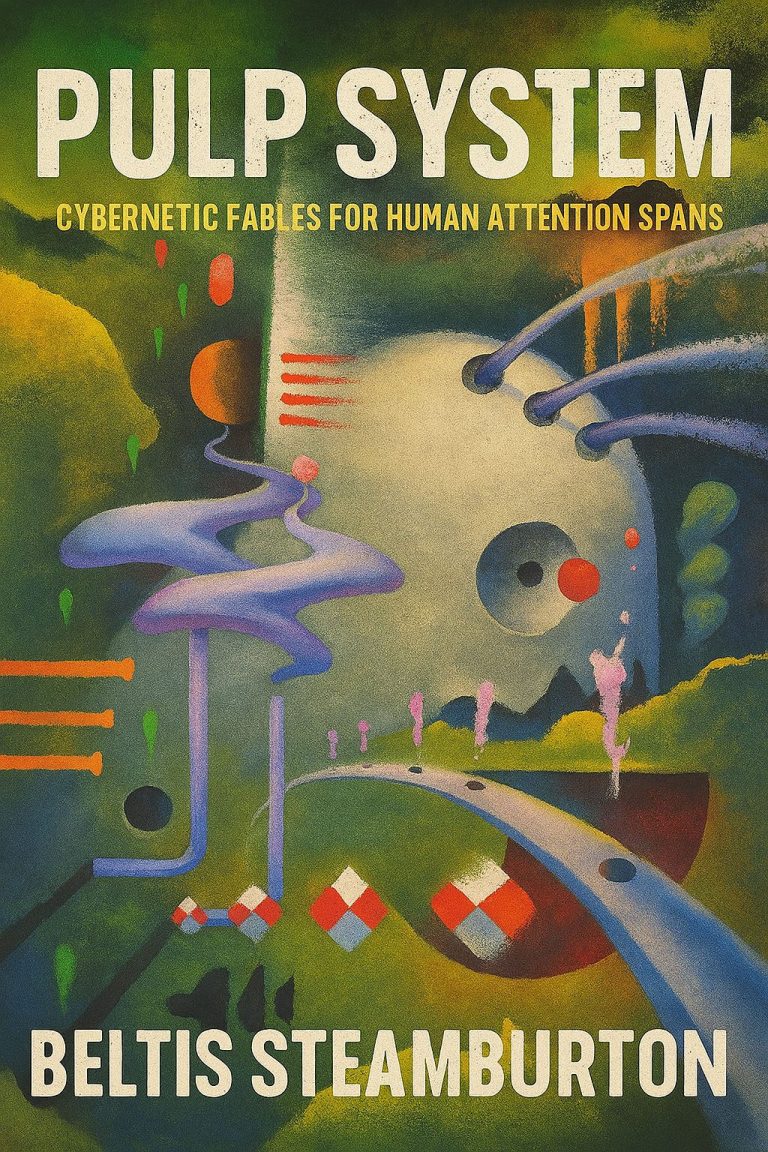
Kindle ebook available
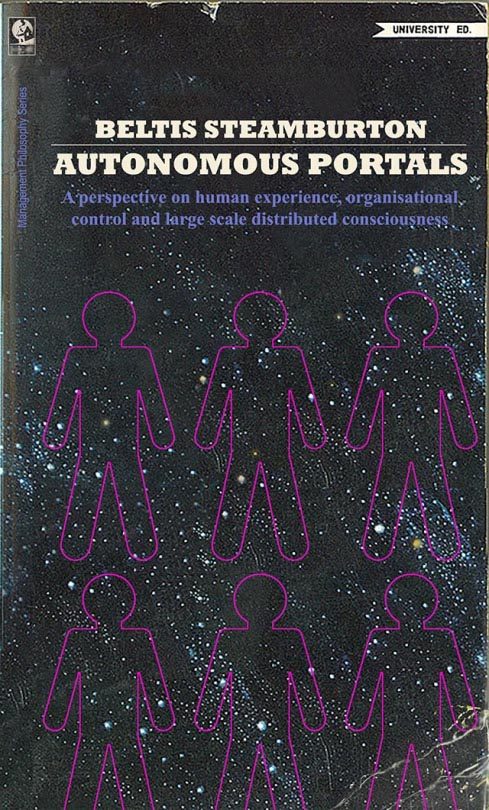
"Autonomous Portals" *
Autonomous Portals began as a set of notes on Systems Thinking and Cybernetics.
Certain ideas returned often enough to demand structure, and the fragments became papers, originally intended for “The Beltis Steamburton Christmas Lectures.” The lectures never took place, but the papers survived, eventually forming this first edition.
Influenced by W. Ross Ashby’s Design for a Brain and Stafford Beer’s Brain of the Firm, the text soon drifts beyond conventional cybernetics into what has been called 'fringe' cybernetics: horizontal and vertical Variety, continuons, portals, conglomeroids, and the Cognophore.
Consciousness is a central theme and Beltis debates notions of consciousness in machine and organisation, The Universal Mind and even how apparently discrete consciousness emerges, or can even be created, from it.
* Out of print / Unavailable